Aloo ke Gutke
A simple preparation of potatoes cooked with local spices and traditionally enjoyed as part of a mountain meal.

Discover the flavours of Chamoli through mountain grains, local lentils, seasonal vegetables, traditional recipes and sweet dishes shaped by generations of Himalayan food traditions.
Food in Chamoli reflects the relationship between mountain communities, agriculture, seasons and the ingredients available around them.
Traditional kitchens make extensive use of locally grown grains, pulses, vegetables, herbs and spices. Many dishes are uncomplicated in preparation yet distinctive in flavour.
Recipes and cooking practices vary between communities and households, making local food an important part of understanding the cultural diversity of the region.
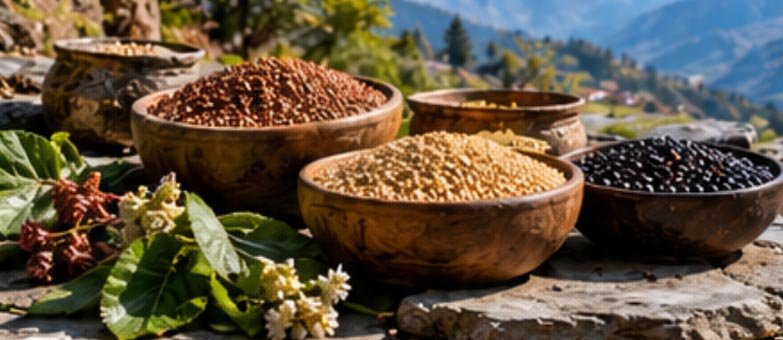
Traditional food begins with what the mountains and farms provide. Grains, pulses, vegetables and herbs form the foundation of many everyday dishes.
These ingredients are valued not only for their nutritional qualities but also for their connection with local agriculture and seasonal food practices.
Explore some of the dishes and preparations associated with Garhwali and Himalayan food traditions.
A simple preparation of potatoes cooked with local spices and traditionally enjoyed as part of a mountain meal.
A traditional leafy-green preparation whose flavour reflects the seasonal produce available in the hills.
A hearty preparation made with roasted lentils, known for its distinctive earthy flavour.
A traditional lentil-based preparation associated with the regional mountain kitchen.
Flatbread prepared using mandua, a traditional Himalayan millet.
Traditional dishes made using bhatt, a locally important black soybean.
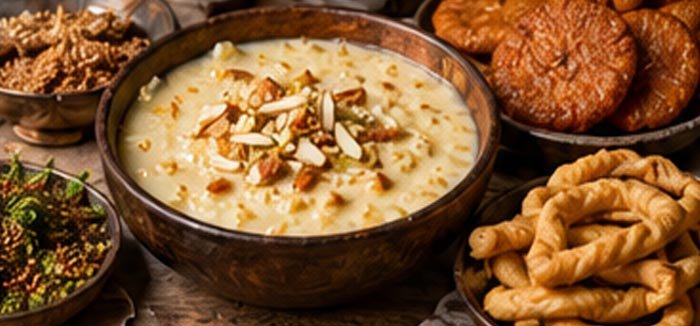
Mountain food is not only about everyday meals. Traditional sweets and festive preparations also form an important part of local food culture.
Jhangora ki Kheer is a well-known preparation using barnyard millet, while dishes such as Arsa and Singal are associated with traditional sweet-making and festive occasions in the Himalayan region.
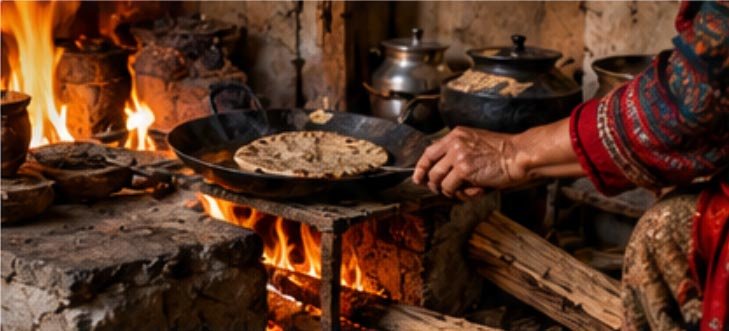
Traditional cooking is often closely connected to household life. Recipes, preparation techniques and food knowledge can be passed from one generation to the next.
The kitchen is also a place where seasonal ingredients are transformed into everyday meals and special dishes for festivals, family gatherings and community occasions.
Food begins with ingredients available from farms, forests and local markets.
Traditional preparations often carry memories and techniques passed between generations.
What is cooked changes with the seasons and availability of fresh produce.
Food offers one of the simplest ways to connect with the everyday culture of a place.
Look for traditional preparations made using locally available ingredients and regional recipes.
Discover grains, pulses, spices, seasonal produce and other ingredients used in Himalayan kitchens.
Understanding where an ingredient comes from can reveal the connection between food and mountain life.
Choosing local eateries, homestays and community food experiences helps support local livelihoods.
| Food Tradition | What to Discover | Character |
|---|---|---|
| Mountain Grains | Mandua, Jhangora and traditional grain preparations | Earthy · Wholesome |
| Local Pulses | Bhatt and traditional lentil preparations | Hearty · Rustic |
| Seasonal Vegetables | Leafy greens and locally available produce | Fresh · Seasonal |
| Traditional Snacks | Regional breads and small preparations | Simple · Homemade |
| Festive Sweets | Jhangora ki Kheer, Arsa, Singal and other sweets | Sweet · Celebratory |
Local food is part of the cultural and economic fabric of mountain communities. Choosing locally prepared food can make your journey more connected to the places you visit.
Discover food shaped by the land, the seasons and generations of Himalayan tradition.